


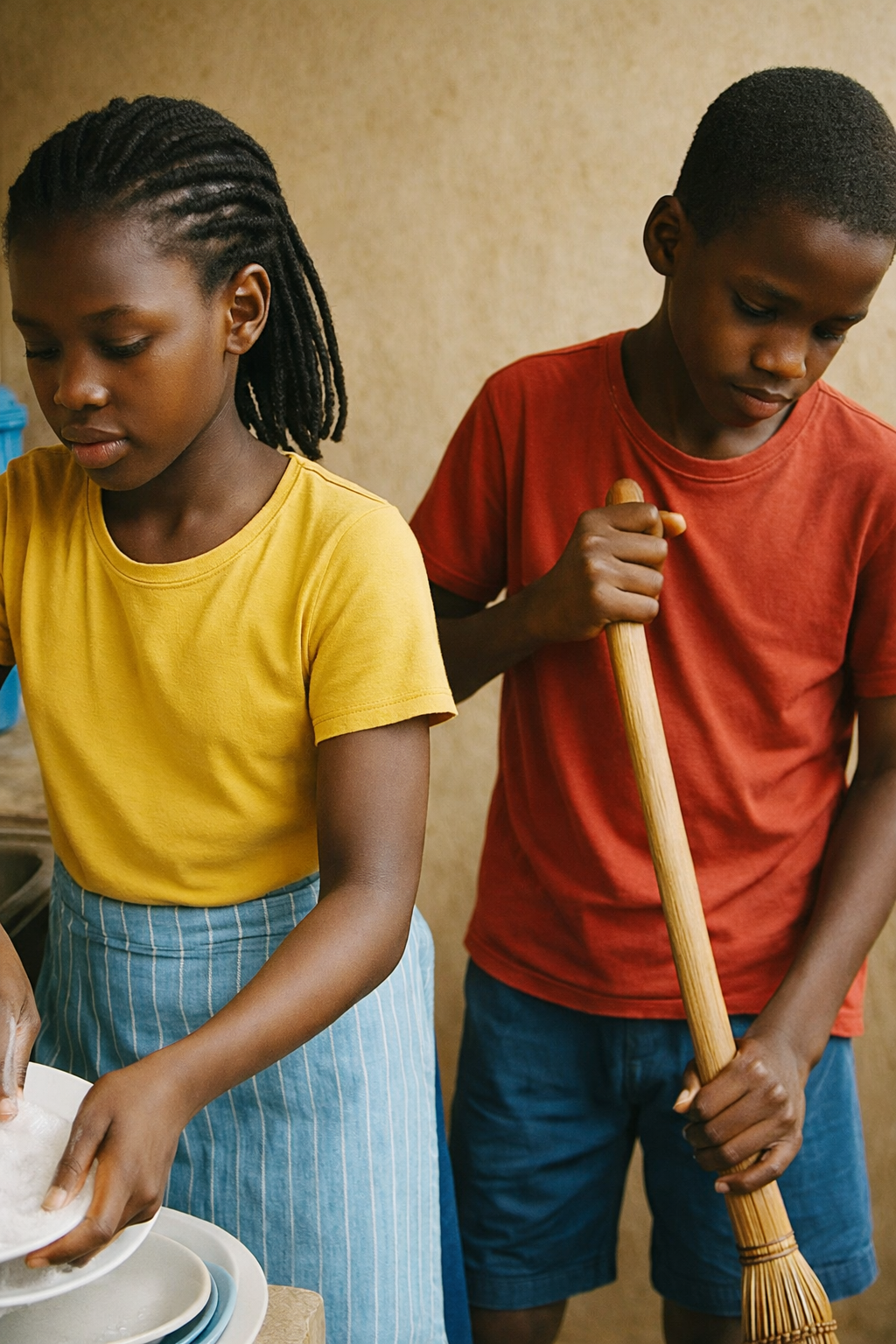
In our society, when a boy and a girl come back from school, the girl is often told, “Hey, my dear, can you please make something for your brother? He is so hungry.” This occurs even when the boy is older than the girl, when both are equally tired, or even when the girl is more tired than the boy. It makes me question where the girl gets her energy that the boy seems to lack.
These dynamics can be traced back to our cultural beliefs and how we raise our children. In a society where domestic chores are primarily considered the responsibility of girls and women, this perception can significantly impact boys’ attitudes and future support for their sisters or wives. To start with, when a boy and a girl are born, it is essential for their parents to ensure that both participate in domestic chores. They should be trained equally to share household tasks, with one child possibly washing dishes while the other sweeps the compound or house. When children share domestic responsibilities equally, they grow up understanding that household duties belong to everyone, not just to women.
Furthermore, advocating for and discussing equal participation in domestic chores at the dinner table can have a profound impact on our children. It is crucial to convey to them that they are both equal and capable of performing the same tasks—except where reproductive roles are involved.
Additionally, conversations about shared domestic chores should not end at home; they must also take place in schools, churches, and other social gatherings. It’s important to let our kids share responsibilities, dismantle stereotypes about gender roles, and promote equality among them.
In conclusion, it is the responsibility of parents, guardians, teachers, and organizations to ensure that our children are educated from an early age on the importance of boys’ and girls’ participation in domestic chores. This is essential to prevent the emergence of men who do not know how to boil water or manage household tasks. Consider the implications if something were to happen to the girl or woman who has done everything for you, or what would happen if you were to move to a more developed country—how would you survive?
Changing these societal norms is not merely a question of tradition; it is vital we educate our children to achieve the desired results. It is easier to teach a young dog a new trick than an old one, and if we want to foster change, we must start with our children.
God bless South Sudan; God bless our children.

![[preview_alt]](https://basmamagazine.net/wp-content/uploads/2026/04/basma-magazine-middle-east-issue2_1.jpg "[preview_title]")